If You Loved The Secret History, Here Are 10 Dark Academia Books to Read Next
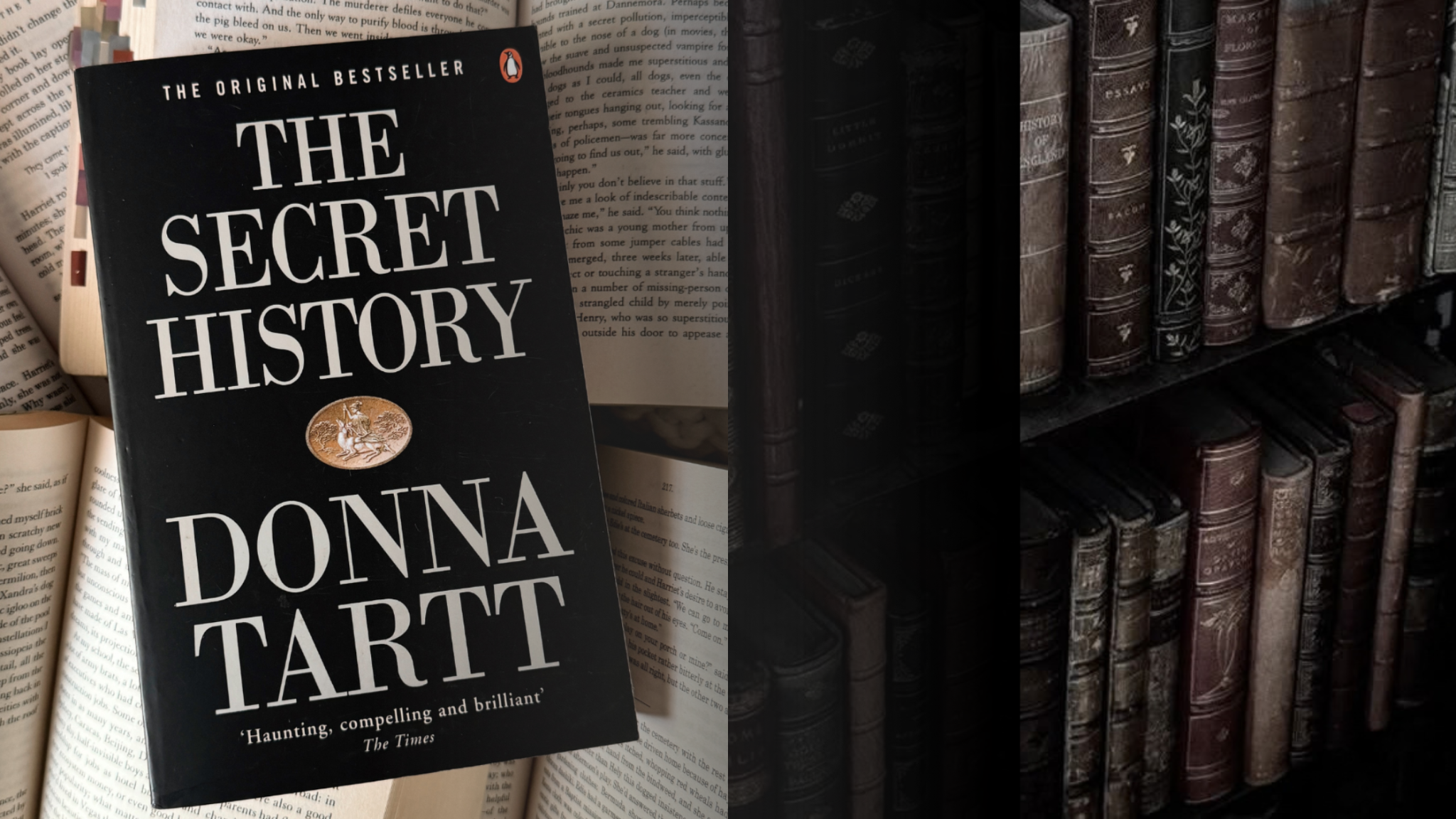
There is something irresistible about a book that promises beautiful libraries, brilliant students, candlelit study sessions, and an elite academic institution, only to reveal something much darker lurking underneath.
Donna Tartt's The Secret History helped define the modern dark academia aesthetic, following a group of classics students at an elite Vermont college whose obsession with beauty, intellectualism, and ancient Greek culture ultimately leads them somewhere much more sinister. But the appeal of dark academia has grown far beyond Tartt's 1992 novel.
Today, readers can find dark academia everywhere from TikTok and Instagram to bestseller lists, with books exploring everything from murder and secret societies to obsessive friendships and the darker side of intellectual ambition.
If you're still thinking about Henry Winter and the rest of the Hampden College gang, or you simply want your next read to feature questionable morals, gorgeous prose, and an alarming number of dead bodies, these 10 books belong on your TBR.
1. If We Were Villains by M.L. Rio
If what you loved most about The Secret History was the combination of elite students, obsessive friendships, murder, and theater-kid levels of drama, start here.
M.L. Rio's If We Were Villains follows seven Shakespearean acting students at an elite conservatory. Their lives revolve around Shakespeare's tragedies, intense friendships, and the increasingly blurry line between performing violence onstage and experiencing it in real life.
Like The Secret History, the novel is deeply interested in the idea that art can become all-consuming. The characters don't simply study Shakespeare: they inhabit his world, adopting his language and tragedies as part of their own identities.
And, naturally, someone ends up dead.
2. Babel: Or the Necessity of Violence by R.F. Kuang
What if Oxford University were built around a magical translation system, one that depended on colonial exploitation?
That's the premise behind R.F. Kuang's Babel, a dark academic fantasy that follows Robin Swift, an orphan from Canton who is brought to England and educated at Oxford's Royal Institute of Translation.
The novel delivers plenty of what dark academia readers love: ancient institutions, secretive professors, academic rivalries, libraries, languages, and students consumed by their studies. But Kuang uses those familiar ingredients to interrogate the power structures that make elite institutions possible in the first place.
It's considerably more interested in colonialism, language, and political power than The Secret History, but readers who enjoy the intellectual atmosphere of Tartt's novel will find plenty to sink their teeth into.
3. The Atlas Six by Olivie Blake
Six extraordinarily talented magicians are invited to compete for membership in the secretive Alexandrian Society, an elite organization devoted to preserving humanity's greatest magical knowledge.
There's just one catch: only five of them will be initiated.
Olivie Blake's The Atlas Six is basically catnip for anyone who likes their academia with a supernatural twist. The characters are brilliant, ambitious, morally questionable, and frequently terrible at communicating with one another, which makes watching them compete, manipulate, and form alliances particularly entertaining.
If your favorite part of The Secret History was watching a group of extremely intelligent people become increasingly unhinged together, this is one to pick up.
4. The Cloisters by Katy Hays
Not every dark academic story needs a university campus.
In Katy Hays' The Cloisters, an art historian named Ann Stilwell arrives in New York and begins working at the Metropolitan Museum of Art's medieval and Renaissance collection. There, she becomes fascinated by a mysterious tarot deck and the possibility of predicting the future.
The novel has everything you could want from a moody fall read: an elite institution, beautiful art, obsessive friendships, secrets, academic rivalry, and a supernatural mystery.
It also captures one of dark academia's most appealing qualities: the feeling that knowledge itself can be dangerous when you become obsessed with possessing it.
5. Bunny by Mona Awad
If you prefer your academia dark and completely bizarre, meet Bunny.
Samantha is a scholarship student in an elite MFA program populated by four wealthy, impossibly polished classmates who call one another "Bunny." She hates them, until they invite her to one of their private gatherings.
Things get weird from there.
Very weird.
Mona Awad's surreal novel takes the familiar dark-academia obsession with elitism and belonging and pushes it into horror territory. It's grotesque, funny, dreamlike, and deliberately difficult to categorize.
It's also a reminder that dark academia doesn't have to mean tweed jackets and Latin translations. Sometimes it means mysterious crafts, rabbit imagery, and questioning whether anything you're experiencing is real.
6. Catherine House by Elisabeth Thomas
What if you could attend an elite university for free, as long as you agreed to spend three years completely cut off from the outside world?
That's the bargain offered by Catherine House.
The students who enter the mysterious institution are expected to abandon their families, relationships, and former lives for the duration of their education. They don't even get to choose what they're studying. In return, they receive an education unlike anything available elsewhere.
Naturally, something is very wrong.
Catherine House leans heavily into atmosphere rather than providing straightforward answers, making it an especially good choice for readers who love the eerie, dreamlike side of dark academia.
7. Vita Nostra by Marina and Sergey Dyachenko
For readers who want their academic setting to be genuinely unsettling, Vita Nostra is hard to beat.
Sasha Samokhina is accepted into a mysterious university after completing a series of increasingly disturbing tasks. Once she arrives, her education becomes stranger and more psychologically demanding than anything she could have imagined.
The novel is difficult to describe without spoiling some of its best surprises, but think of it as dark academia filtered through surreal fantasy and existential horror.
Unlike many books in the genre, the question isn't simply whether the characters will survive their academic experience.
It's whether they'll still be themselves when it's over.
8. The Maidens by Alex Michaelides
A group of beautiful, brilliant students. An elite university. A charismatic professor. And a murder.
Alex Michaelides' The Maidens follows Mariana Andros, a group therapist who becomes convinced that Edward Fosca, a professor at Cambridge, is responsible for the murder of one of his students.
The novel combines psychological thriller conventions with the familiar ingredients of dark academia, including Greek mythology, secretive academic communities, and an institution whose picturesque exterior conceals something much uglier.
It's an especially easy recommendation for readers who want the atmosphere of The Secret History but with a more straightforward mystery at the center.
9. Ninth House by Leigh Bardugo
Yale University might seem like an unusual setting for a fantasy novel, but Ninth House turns the university's real-world secret societies into the foundation for something much darker.
Alex Stern is a freshman at Yale and an unlikely member of Lethe, a secret organization tasked with monitoring the university's occult societies. When a local murder becomes connected to one of those societies, Alex is pulled into a world of ghosts, magic, privilege, and institutional secrecy.
The novel is darker and more fantastical than The Secret History, but the two share a fascination with elite institutions and the hidden worlds that exist beneath their polished surfaces.
If your ideal college experience involves secret societies and forbidden rituals rather than football games and freshman mixers, put this one at the top of your list.
10. These Violent Delights by Micah Nemerever
Two brilliant college students meet, become obsessed with one another, and gradually convince themselves that their relationship is more important than everything else in their lives.
Sound familiar?
Micah Nemerever's These Violent Delights is an intense psychological novel about Paul and Julian, two students who form an all-consuming friendship at an elite university. Their intellectual connection quickly becomes an obsession, and their attempts to protect one another lead them somewhere increasingly dangerous.
There are no secret societies or supernatural elements here. Instead, the darkness comes entirely from the characters themselves.
And honestly, that might be even scarier.
Dark Academia Is About More Than Aesthetic
Part of the reason dark academia has remained so appealing is that it offers readers more than a visual aesthetic.
Yes, there are old libraries, autumn leaves, vintage clothing, candlelit rooms, and enough leather-bound books to fill a Pinterest board. But underneath all of that is a much more compelling fantasy: the idea that knowledge is powerful, that intellectual pursuits can become obsessive, and that the institutions we admire might have secrets of their own.
That's why The Secret History continues to inspire new generations of readers decades after its publication.
The best dark academia novels don't simply ask what happens when brilliant people enter beautiful institutions. They ask what those people are willing to sacrifice once they become convinced that their intelligence, ambitions, or relationships make them exceptional.
And sometimes, as these books prove, the answer is everything.
Post a comment