Beyond the Water Bottle: 5 Everyday Signs You’re Dehydrated (And How to Fix It)


We have all heard the standard health advice: drink eight glasses of water a day, carry a reusable water bottle everywhere, and make sure you hydrate when working out. Because of these popular rules, most people assume that unless they are sweating under a blazing sun or feeling a dry, parched throat, their body has all the fluid it needs.
However, clinical nutritionists and health experts at institutions like the Mayo Clinic point out that mild chronic dehydration is remarkably common—especially among indoor office workers and daily coffee drinkers.
Thirst is actually a late-stage warning signal; by the time your mouth feels dry, your body is already operating at a fluid deficit. Before that parched feeling sets in, your body communicates low water levels through subtle, everyday signals that are easy to misinterpret.
The Hidden Mechanics of Water Loss
Every organ system in the body requires precise fluid balance to function efficiently. Water acts as a primary transport medium, delivering nutrients to cells, flushing metabolic waste, regulating internal temperature, and lubricating joints.
When fluid intake drops even by as little as 1 to 2 percent of total body weight, research shows that cognitive and physical performance begin to decline. The brain initiates a conservation strategy, prioritizing water distribution to vital survival organs (like the heart and lungs) while dialing back supply to non-essential functions.
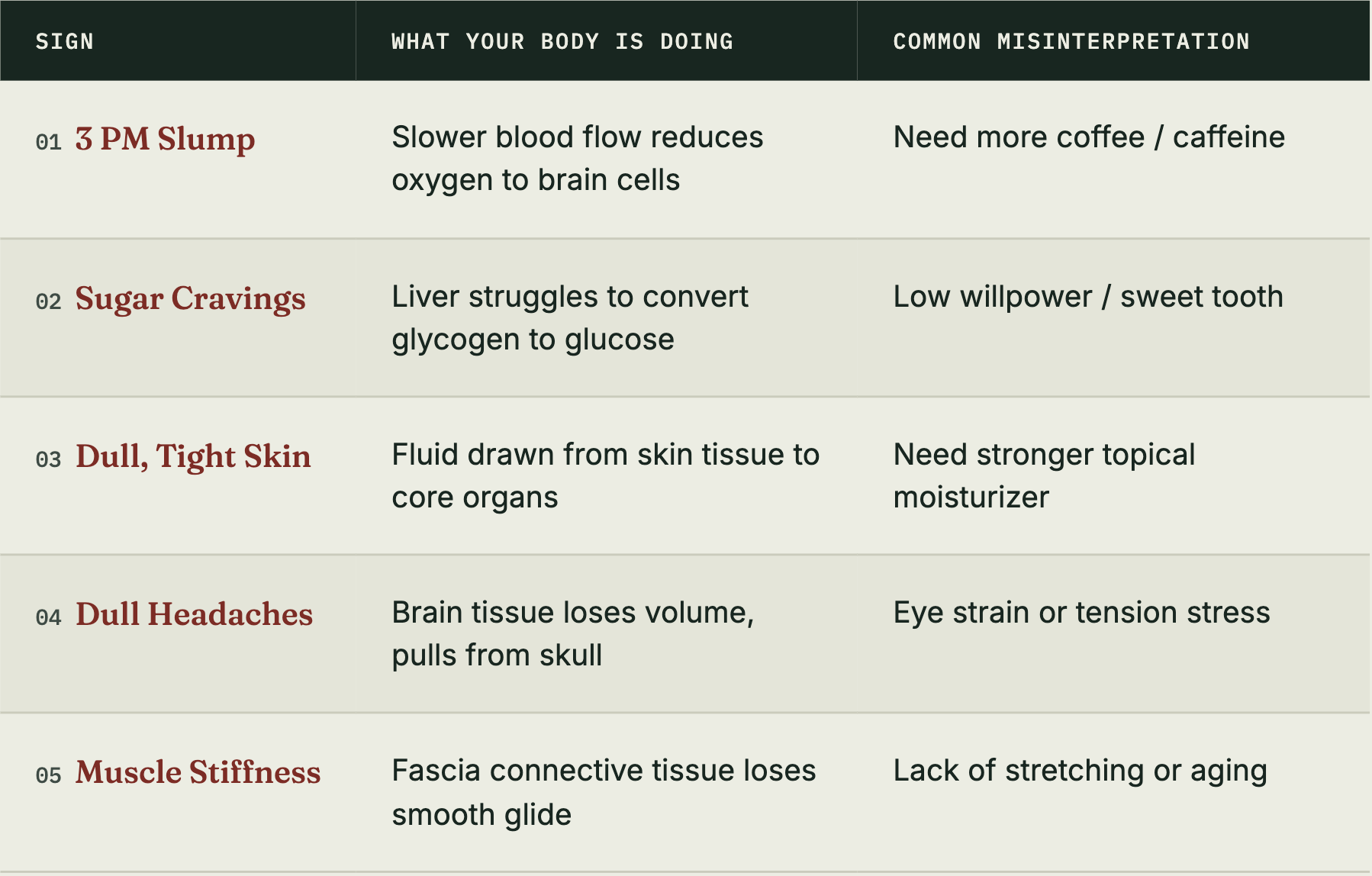
This internal reallocation manifests in five surprising everyday ways:
1. The "3 PM Slump" and Brain Fog
If you find your concentration dipping and your energy crashing mid-afternoon, caffeine or poor sleep might not be the primary culprits. Studies published by Harvard Health Publishing demonstrate that even mild dehydration impairs concentration, short-term memory, and mood regulation. Reduced fluid volume lowers overall blood volume, forcing your heart to work harder to pump blood and slowing oxygen delivery to the brain.
2. Sudden, Unexplained Sugar Cravings
When you are dehydrated, it becomes difficult for your liver to break down glycogen—the stored form of glucose that your body uses for energy. Because your organs struggle to access those stored reserves without adequate water, your brain sends out urgent hunger signals requesting quick-burning fuel. This often manifests as an intense, sudden craving for sugary snacks or carbohydrates.
3. Tight, Dull, or Inelastic Skin
While expensive serums and moisturizers protect the outer skin barrier, true skin plumpness comes from internal cellular hydration. When fluid levels drop, the body draws moisture away from the skin to support internal organs. You may notice your skin looking slightly duller, fine lines appearing more pronounced, or a lingering dryness that topical lotions fail to fix.
4. Persistent Low-Grade Tension Headaches
When overall body water drops, tissues throughout the body lose a small percentage of their volume. This includes the brain tissue itself, which contracts slightly and pulls away from the inner surface of the skull. This physical friction puts pressure on surrounding pain receptors, triggering a dull, lingering tension headache across the forehead or back of the neck.
5. Unexplained Joint Stiffness and Muscle Tightness
Muscles, tendons, and joints rely on fluid-filled sacs and lubricated connective tissues (fascia) to slide smoothly over one another during movement. In adequate fluid conditions, these tissues stay soft and flexible. When dehydrated, fascia becomes sticky and rigid, leaving you feeling stiff when standing up from your desk or experiencing unexpected muscle cramps.
Hydrating Smarter: Why Chugging Water Isn't Enough
When people realize they are dehydrated, their instinct is often to pick up a large water bottle and chug a liter of plain water in one sitting. Unfortunately, this strategy is inefficient.
Drinking huge quantities of plain water very quickly floods the stomach and dilutes blood sodium levels. Your kidneys respond by filtering out the excess fluid rapidly, sending you to the bathroom without actually absorbing that moisture into your cells.
3 Actionable Tips for True Cellular Hydration
To achieve genuine, lasting hydration, focus on how well your body absorbs fluids rather than just the volume you consume:
- Sip Consistently Throughout the Day: Drink small amounts of water regularly rather than large quantities all at once. This gives your digestive system and blood vessels time to distribute moisture gradually.
- Add Minerals and Electrolytes: Water requires minerals like sodium, potassium, and magnesium to pass through cell membranes effectively. Adding a pinch of unrefined sea salt, a squeeze of fresh lemon juice, or an electrolyte drop to your glass improves cellular absorption dramatically.
- "Eat" Your Water: Incorporate high-water-content foods into your diet—such as cucumbers, celery, watermelon, strawberries, and leafy greens. Water bound within food matrixes is absorbed more slowly during digestion, providing a steady stream of hydration over hours.
Simple Habits for Daily Energy
Hydration isn't just about avoiding thirst—it is a baseline requirement for mental clarity, digestive health, physical recovery, and steady energy. By listening to your body's subtle early signals and adopting smarter drinking habits, you can keep your system functioning at its best all day long.
References & Sources
- Mayo Clinic: Water: How much should you drink every day?
- Harvard Health Publishing: The importance of hydration for cognitive function and daily health.
- Journal of Clinical Nutrition / National Institutes of Health (NIH): Effects of mild dehydration on cognitive performance, fatigue, and fluid balance.

Post a comment